How to Build a SaaS with Bolt.new in 2026: AI-Powered MVP Development for Founders
Alex
··11 min read
Bolt.new is redefining how non-technical founders approach SaaS development in 2026, turning the traditionally complex, code-heavy process into a streamlined, AI-powered workflow. With its intuitive interface and smart automation, Bolt.new enables founders to go from idea to functional SaaS product faster than ever—without writing a single line of code. This shift is part of a broader trend toward vibe coding for founders, where vision and user experience take precedence over technical syntax. For those asking how to build SaaS with AI for non-technical founders, tools like Bolt.new are proving to be game-changers.
Quick Answer: Yes, you can build a SaaS with Bolt.new—fast and without coding. It’s designed specifically for founders who want to launch AI-powered MVPs quickly and efficiently. In this guide, we’ll walk through how to build SaaS with Bolt.new, from initial concept to deployment, and show you how Shipkit can help turn your vision into a production-ready product.
Understanding Bolt.new: The AI-Driven Platform for Rapid SaaS Development
Bolt.new is a browser-based development environment that empowers non-technical founders to build full-featured SaaS applications using AI and no-code tools. Unlike traditional platforms that require coding or deep technical oversight, Bolt.new turns natural language prompts into functional UIs, workflows, and backend logic—making it a leading choice for founders exploring AI cofounder tools for startup founders. Its real-time collaboration features and autonomous debugging engine, introduced in Bolt v2 in October 2025, drastically reduce development friction, enabling teams to iterate quickly without relying on engineers.
The platform thrives in MVP development, where speed and validation matter more than complex architecture. With drag-and-drop components, built-in user authentication, and Stripe integration out of the box, Bolt.new handles the core technical demands of most early-stage SaaS products. It’s designed for founders who want to build AI MVP without coding, turning vision into a working product in days, not months. The ecosystem also supports prompt to app tools for startups, allowing users to describe features in plain English and watch them materialize instantly.
AI transforms ideas into apps—no code required
Its accessibility is reflected in its adoption: Bolt.new generated over 1 million websites in just five months, proving its viability against traditional workflows. For founders weighing options, this platform sits at the heart of a growing movement—where building a SaaS no longer requires a technical co-founder. If you're evaluating paths to launch, our guide on building a startup without a technical co-founder offers strategic alternatives beyond DIY tools.
How Bolt.new Leverages AI for Instant Prototyping
Bolt.new interprets natural language commands—like “Create a dashboard for user analytics”—and generates fully interactive UIs with connected data models. Think of it as a design assistant that writes code behind the scenes, translating your vision into a clickable prototype in seconds. This AI-driven workflow eliminates manual coding, making it ideal for rapid testing and user feedback.
Key Features That Make Bolt.new Ideal for SaaS MVPs
Core capabilities include drag-and-drop interface building, real-time database management, role-based access control, and native payment integrations. These components—typically time-consuming to implement—are pre-built and configurable, accelerating time-to-market. Whether you’re validating a subscription model or testing user workflows, Bolt.new provides the essential infrastructure non-technical founders need to launch fast.
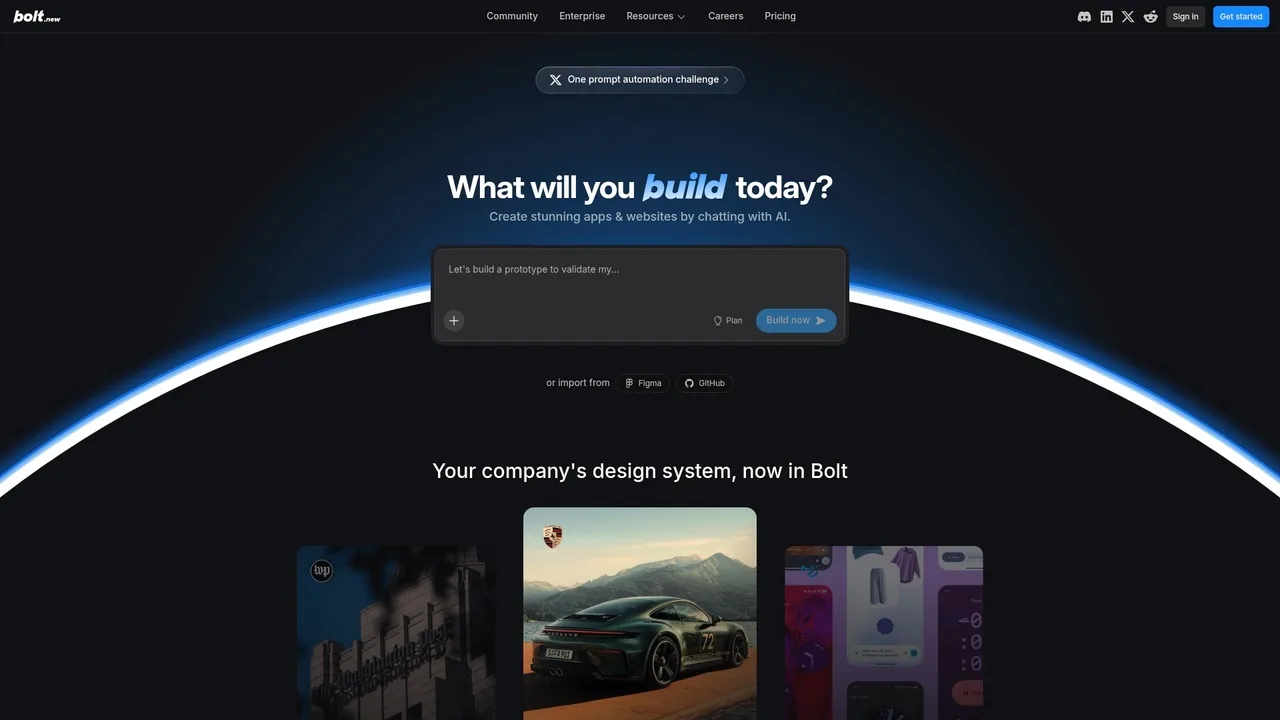
Bolt.new dashboard with AI prompt bar and modular UI components
Step-by-Step: Building Your First SaaS MVP with Bolt.new in 2026
Launching a production-ready SaaS in days—not months—is now achievable thanks to AI-powered platforms like Bolt.new. For non-technical founders, this shift means going from concept to live product without writing a single line of code. By combining intuitive AI prompts with modular backend systems, Bolt.new streamlines MVP creation from idea to deployment. Below is a proven, step-by-step framework used by founders to validate SaaS concepts rapidly in 2026.
Step 1: Defining Your SaaS Idea and User Journey
Start by outlining your core value proposition: What problem are you solving, and for whom? Use Bolt.new’s AI canvas to map key user actions—such as onboarding, dashboard interaction, or report generation. Enter natural language prompts like “Users sign up, upload data, and get weekly insights” to generate an initial flow. The platform suggests optimized user paths based on similar validated products, helping you refine scope before development begins.
Step 2: Using AI to Generate Your Initial App Structure
With your user journey defined, prompt Bolt.new to auto-generate the app skeleton. Commands like “Create a SaaS dashboard with user profiles, data upload, and analytics cards” produce fully interactive UIs and underlying data models instantly. You can rename, rearrange, or delete components via drag-and-drop. This phase turns abstract ideas into a clickable prototype—laying the foundation for real user testing.
Step 3: Adding Authentication, Payments, and Business Logic
Security and monetization are built-in. Enable email/password or social login with one click, then assign user roles (admin, customer, etc.) using visual role-based controls. For subscription models, connect Stripe via Bolt.new’s native integration and configure pricing tiers. Use the visual logic builder to automate workflows—like sending a welcome email after signup or locking features behind paid plans—without scripting.
Step 4: Testing and Publishing Your MVP in Under 48 Hours
Preview your app in real time, share a test link with early users, and collect feedback directly within Bolt.new. Iterate instantly by editing prompts or components. When ready, deploy with a single click to a secure, scalable environment. Founders are now launching AI-powered MVPs in under two days—a process that once took months—proving that from ai prototype to production app is not just possible, but practical. For deeper planning, review our guide on how to write a SaaS PRD for founders in 2026.
Real-World SaaS Applications Built with Bolt.new in 2026
Case Study 1: AI-Powered Task Manager for Remote Teams
A solo founder in Austin used Bolt.new to build FlowState, a productivity SaaS for distributed teams, in just 72 hours. By describing the app’s core features in plain English—AI-generated meeting summaries, automated task prioritization, and real-time team workload analytics—the founder guided Bolt.new’s AI to generate the full frontend and backend structure. Authentication and role-based access for managers and team members were enabled instantly, while Stripe integration supported a tiered subscription model. The visual logic builder automated workflows like sending digest emails and escalating overdue tasks. FlowState launched with 200 beta users and validated demand before investing in deeper customization, proving how founders can move quickly from concept to market without coding expertise. For teams structuring similar tools, writing a clear SaaS PRD for founders in 2026 is critical to aligning AI development with business goals.
Case Study 2: Niche Marketplace for Freelance Design Feedback
In Berlin, a designer-turned-founder created CritiqueHive, a two-sided platform connecting freelance illustrators with vetted reviewers. Using Bolt.new, they built user profiles, a submission dashboard, and a review scoring system—all without writing code. The platform enforced access controls so only paying users could submit work, while reviewers unlocked earnings via Stripe payouts after completing feedback. The AI environment interpreted natural language prompts to generate matching logic between submitters and reviewers based on style and expertise. By 2026, solutions like this reflect a broader shift: over 70% of new SaaS products are expected to include no-code or low-code components, accelerating time to market for non-technical founders. When comparing paths like Cursor vs Lovable for founders, Bolt.new stands out for integrating business logic and payments seamlessly, making it a practical choice for launching AI-powered MVPs fast.
From napkin sketch to live app—AI makes it real in hours
When AI and No-Code Aren’t Enough: Planning Your Transition to Custom Code
While Bolt.new accelerates MVP development with AI-generated logic and no-code agility, it’s not designed for long-term scale. As your user base grows and feature demands evolve, you’ll hit invisible ceilings—performance bottlenecks, integration constraints, and algorithmic complexity—that no-code environments can’t resolve. Recognizing these thresholds early helps you plan a smooth evolution from prototype to production-grade SaaS.
Signs Your SaaS Has Outgrown Bolt.new
Sluggish response times under 100 concurrent users, a common tipping point for no-code platforms not optimized for high traffic.
Inability to implement custom algorithms or machine learning models that require fine-tuned backend control.
Data silos and API limitations preventing deep third-party integrations or real-time syncing with external systems.
Growing user complaints about latency, failed transactions, or restricted workflows.
Need for advanced security or compliance (e.g., SOC 2, GDPR) beyond standard no-code offerings.
These are not bugs—they’re symptoms of success. Approximately 25 to 30 percent of no-code SaaS projects get rewritten in custom code within two years due to such constraints, often after outpacing their platform’s capabilities.
How to Migrate from Bolt.new to a Custom-Built Application
Start with a structured exit strategy:
Export and audit all data—Ensure clean, structured access to user records, transactions, and behavioral logs.
Map core workflows into a technical specification, refining your original SaaS PRD with scalability in mind.
Choose a development partner experienced in converting AI prototypes into robust applications—critical for preserving momentum.
Phase the rollout: Launch critical features first, validate performance, then decommission the Bolt.new instance incrementally.
Factor
No-Code (Bolt.new)
Custom-Built App
Max Concurrent Users
~100
10,000+
Custom Logic Depth
Limited (UI-driven)
Full backend control
Migration Cost
N/A
$50,000–$250,000*
Long-Term Ownership
Platform-dependent
Full IP and infrastructure control
*Rebuilding from a mature no-code base typically falls in this range, depending on complexity.
Choosing your path: launch fast or scale strong?
Why Founders Partner with Technical Co-Founders or Agencies
When AI-generated code is no longer enough, founders need more than just developers—they need strategic partners. Many opt for agencies like Shipkit to avoid the time and equity costs of hiring a technical co-founder. These teams specialize in transforming Bolt.new prototypes into scalable, secure systems, handling everything from architecture design to CI/CD pipelines. This shift—from AI cofounder tools for startup founders to professional engineering execution—marks the transition from validation to velocity. It’s not a failure of no-code; it’s the next stage of growth.
Frequently Asked Questions About Building SaaS with Bolt.new
Can I build a production-ready SaaS with Bolt.new?
Yes—Bolt.new is ideal for launching MVPs and early-stage SaaS products. While it delivers functional, user-tested applications quickly, scaling beyond ~100 concurrent users often requires migrating to a custom stack. It’s the best AI app builder for founders validating ideas without code, but long-term growth demands deeper backend control.
Is Bolt.new better than Cursor or Lovable for SaaS MVPs?
Each platform serves different needs. Bolt.new excels in rapid, full-stack prototyping with integrated UI and backend logic—perfect for non-technical founders. Cursor is better for developers building production-grade apps, while Lovable focuses on high-fidelity UX prototypes. For speed and simplicity in launching a SaaS with AI, Bolt.new leads, but you can compare how to build a SaaS with Cursor AI for code-centric workflows.
Do I need to know how to code to use Bolt.new?
No. Bolt.new is designed for non-technical founders using AI-assisted workflows and drag-and-drop interfaces. You can build SaaS with AI for non-technical founders seamlessly, letting the platform generate logic, workflows, and even database structures from plain English prompts.
How fast can I launch a SaaS using AI and Bolt.new?
Many founders launch MVPs in 24–48 hours. This speed makes it one of the fastest ways to validate a product-market fit. If you’ve ever wondered, “Can you launch a SaaS with AI in 48 hours?”—Bolt.new proves the answer is yes.
Can Bolt.new handle user authentication and payments?
What happens when my app needs more features or users?
When traffic or complexity grows, Bolt.new’s limitations emerge. At that stage, migrating to a custom backend ensures scalability, security, and full IP ownership—similar to the costs and process of moving from Bubble.
Final Thoughts: Building SaaS Faster Than Ever in 2026
Bolt.new has redefined what’s possible for non-technical founders, making it faster and more intuitive than ever to build a SaaS with AI at the core. From AI prototype to production app, the journey now takes days instead of months—enabling rapid validation and investor-ready demos. Platforms like this eliminate the initial need for a technical co-founder, empowering visionaries to own their product’s evolution. But as growth accelerates, limitations in customization and scale become real. When that time comes, transitioning to a dedicated development path ensures long-term viability—just like the strategic shift detailed in our guide on no-code vs custom app development for startups.
Article FAQ
Practical next steps
Who is this MVP guide for?
This guide is written for non-technical founders, operators, and small teams who need to make product decisions before hiring a full engineering team. It focuses on practical scope, cost, timeline, and execution trade-offs rather than abstract startup theory.
What should I do after reading this article?
Turn the idea into a small decision: validate the riskiest assumption, estimate the build scope, and decide whether the first version should be no-code, custom code, or a hybrid. Shipkit's free estimate and MVP scope builder can help you translate the article into a concrete plan.
Can Shipkit help implement this kind of product?
Yes. Shipkit helps founders turn validated ideas into fixed-scope MVPs, SaaS products, internal tools, marketplaces, and AI-enabled workflows. The best starting point is to get an estimate or compare your build path before committing budget.