How to Launch a Startup in 2026 Without a Developer: A Non-Technical Founder’s Guide
Alex
··12 min read
You’ve got a startup idea burning in your mind, but no developer in sight — and the thought of learning to code or hunting for a technical co-founder feels overwhelming. You're not alone: thousands of non-technical founders face this same hurdle every year, wondering how to turn vision into product without writing a single line of code. The good news? In 2026, launching a startup without a developer is not only possible — it’s practical, fast, and increasingly common. Tools and services now exist that allow founders to go from concept to market-ready app in weeks, not years.
Quick Answer: If you have a startup idea but no developer, focus on validating your concept first, then partner with a product development service that handles technical execution. Non-technical founders can launch fully functional MVPs by clearly defining their problem, target audience, and core features — then outsourcing development to a trusted team that delivers production-grade applications with payments, user management, and scalable logic built in.
This guide will walk you through the first steps after a startup idea, how to build a startup without a technical co-founder, and when to use professional development services instead of no-code tools. You’ll learn how to move fast, avoid common pitfalls, and launch with confidence — even if you’ve never touched code. For a deeper look at alternative paths, check out our full guide on what to do when you have a startup idea but no developer.
Validate Your Idea Before Writing a Single Line of Code
Jumping straight into development without validating your idea is the fastest path to wasted time and capital — especially for a non-technical founder. The reality is stark: 34% of startups fail because they build something nobody wants, making poor product-market fit the top killer of early-stage ventures. Before you consider coding or hiring developers, you need proof that real people face the problem you’re solving — and that they care enough to act.
Validation isn’t about building a perfect product. It’s about testing demand with minimal effort using lean customer development tactics. This approach lets you refine your idea based on feedback, not assumptions, and dramatically increases your odds of building something people will actually pay for.
Validating your idea is like searching for water in the desert — you need proof before digging deep
Conduct Problem Interviews with Real Users
Talk directly to potential customers before designing any solution. Identify individuals in your target audience and ask open-ended questions about their pain points, workflows, and frustrations. Focus on understanding their world, not pitching your idea. If multiple users independently describe the same problem, you’ve found a signal worth pursuing. For deeper guidance, see our full framework on how to validate your startup idea before development.
Build a Landing Page to Test Interest
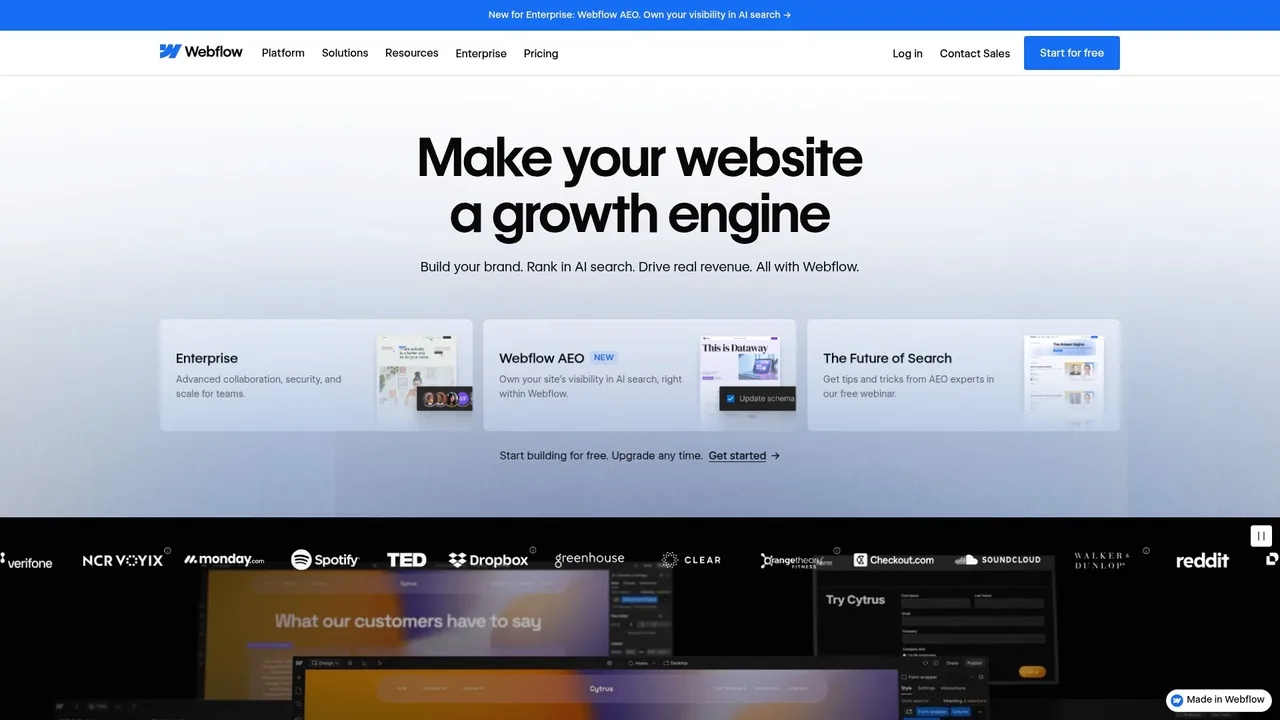
Create a simple no-code landing page describing your solution and include a clear call to action — like “Get Early Access” or “Join Waitlist.” Drive targeted traffic through social media, communities, or small ad campaigns. A conversion rate above 20% typically signals strong interest and can justify moving forward with development.
Building a landing page on Webflow — a no-code tool ideal for validating startup ideas
Use Smoke Tests and Pre-Sales to Gauge Commitment
Go beyond sign-ups by simulating real transactions. Try a “fake door” test — present a “Buy Now” button that collects emails instead of payments — or take refundable deposits. If users are willing to part with money, even conditionally, you’ve validated both demand and willingness to pay.
Your MVP Options in 2026: No-Code, AI, or Outsourcing?
You’ve validated your idea—now comes the critical decision: how to build your MVP without coding skills. In 2026, non-technical founders have real choices, each with trade-offs in speed, scalability, and long-term control. The best path depends on your product’s complexity, growth goals, and how much ownership you want over the final product.
No-Code Platforms: Speed vs. Limitations
No-code tools like Webflow, Bubble, and Adalo let you build functional apps quickly, often in days or weeks. They’re ideal for simple marketplaces, internal tools, or landing pages with basic user flows. Webflow starts at $18/month for basic sites, Adalo at $36/month for unlimited apps, and Bubble at $69/month with usage-based scaling—making them cost-effective for early testing. However, these platforms struggle with complex logic, real-time interactions, or heavy data processing. As your user base grows, performance bottlenecks and limited customization can stall progress. Migrating from Bubble to a custom app, for example, can cost $15,000 or more in development time. For founders asking, “What’s the best way for a non-technical founder to build an app?”—no-code is fast, but rarely a long-term solution.
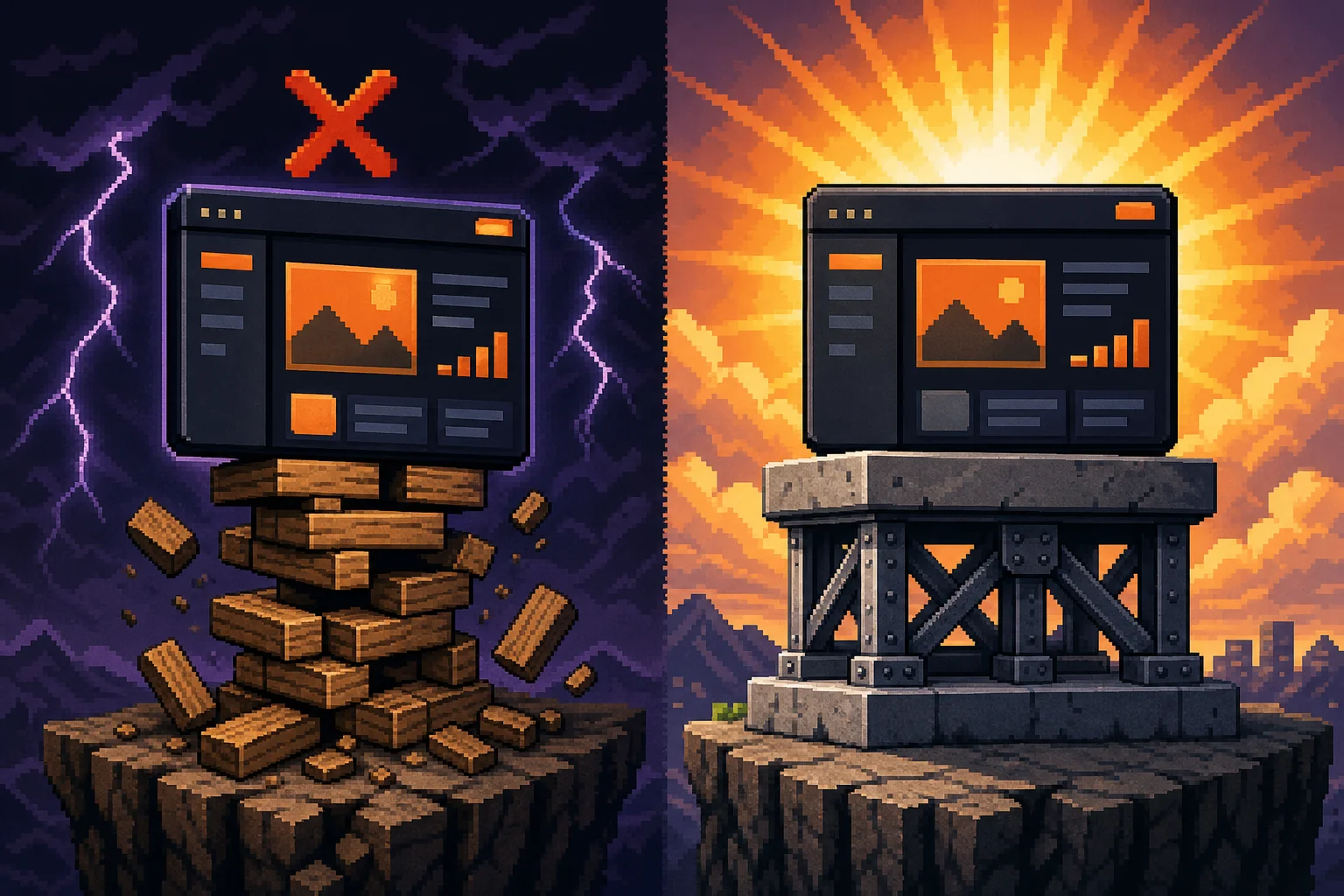
No-code may launch you fast — but only custom code builds a foundation for scale
AI-Powered Development: Hype or Help?
AI coding tools are accelerating development, but they don’t replace technical execution. Platforms like GitHub Copilot help developers write code faster—according to GitHub and Microsoft, users complete tasks 55.8% quicker and are 78% more likely to finish them successfully. With 84% of developers using or planning to use AI tools in 2026, the trend is clear: AI is a force multiplier, not a standalone builder. For non-technical founders, AI can assist in drafting specs or generating basic UI mockups, but it can’t architect a scalable backend or handle nuanced user workflows. While some wonder “Can AI replace a technical co-founder?”—the answer today is no. It supports skilled teams but can’t validate logic, ensure security, or debug complex systems on its own.
Outsourcing to a Product Development Agency
For founders who want a production-ready, scalable app with full ownership, outsourcing to a specialized agency is increasingly the optimal path. Agencies like Shipkit act as your technical co-founder, translating your vision into a fully functional product with integrated payments, user roles, and secure infrastructure. Unlike no-code or AI-only approaches, this route delivers a custom codebase you fully own—ready to scale, raise funding, or integrate with third-party systems. While MVP development costs typically range from $10,000 to $150,000 in 2026, the investment buys speed, quality, and long-term flexibility. This is how non-technical founders build apps that last—without hiring a single developer.
Option
Speed
Cost
Scalability
Best For
No-Code
Fast (days–weeks)
Low ($18–$69+/mo)
Limited
Simple prototypes, early validation
AI-Assisted
Medium
Variable
Medium
Supporting developers, not standalone builds
Outsourced Agency
Fast (weeks–months)
High ($10k–$150k+)
Full
Scalable, investor-ready MVPs
How to Work With Developers — Even If You’re Not Technical
You don’t need to code to lead product development — but you do need to communicate clearly. Misalignment between founders and developers is one of the top reasons projects stall or fail, especially when technical expertise is outsourced. The absence of a technical co-founder increases startup failure risk significantly, according to an analysis by First Round Capital, making structured collaboration even more critical for non-technical founders.
Define Your Requirements with User Stories and Wireframes
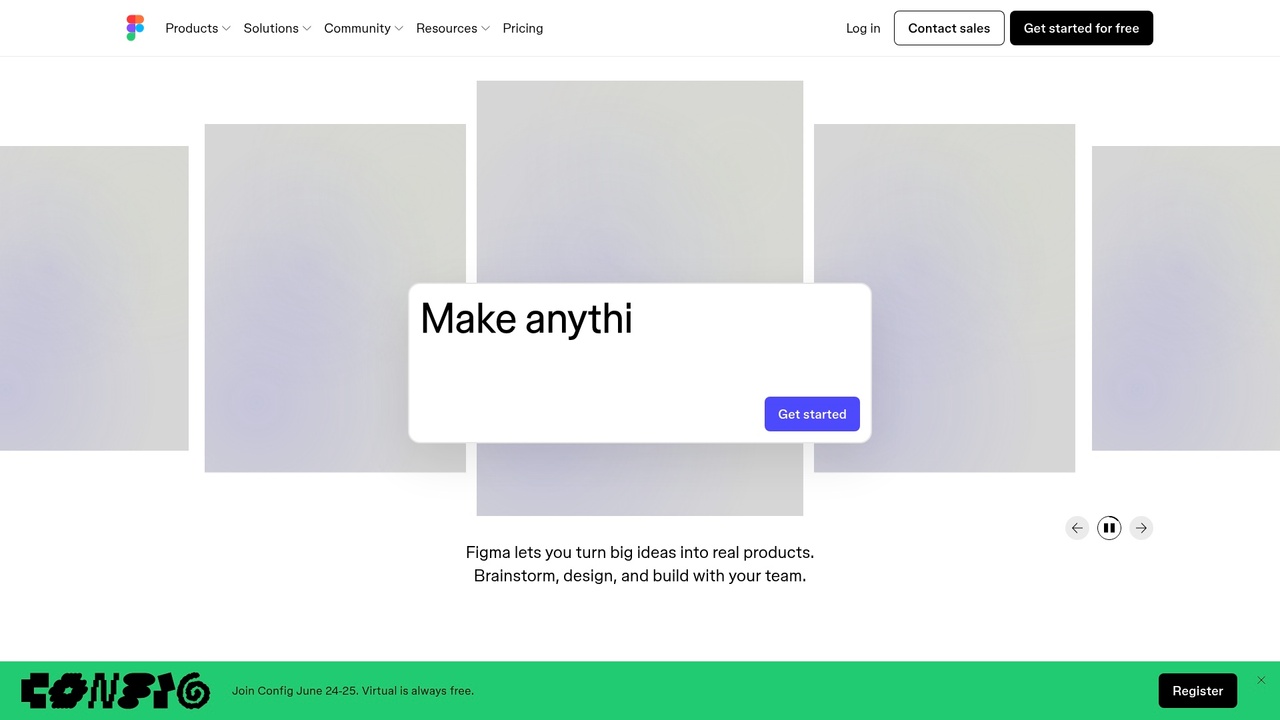
Start by mapping out how users will interact with your app. Use tools like Figma to create clickable wireframes that visualize each screen and flow. Pair these with user stories in Notion — simple statements like “As a customer, I want to reset my password so I can regain account access.” This combination gives developers precise context, reduces guesswork, and aligns everyone around the intended experience. A well-documented spec also speeds up estimates and prevents costly mid-build changes.
Designing user flows in Figma — a critical step before development begins
Choose Between Freelancers, Teams, or Full-Service Agencies
Freelancers offer affordability but often lack bandwidth for full-stack builds. Distributed teams provide scale but introduce coordination overhead. Full-service agencies like Shipkit deliver end-to-end ownership, fixed timelines, and post-launch support — ideal if you're a founder with an idea but no tech team. For long-term viability, prioritize accountability and continuity over lowest cost. Consider reviewing options such as the top San Diego MVP development agencies for startups in 2026 to find vetted partners.
Ask the Right Technical Questions Without Sounding Ignorant
You don’t need deep coding knowledge — just clarity on outcomes. Ask:
“What tech stack will you use, and why is it scalable for our growth?”
“How do you handle security, especially for user data and payments?”
“Can you provide a fixed timeline and milestones under a contract?”
“Will I own the code and have full access to repositories?”
These questions signal seriousness and ensure you’re building something durable, not just functional.
Funding and Business Structure for Non-Technical Founders in 2026
Should You Raise Money or Self-Fund Your MVP?
Deciding between self-funding and raising pre-seed capital depends on your product’s complexity and growth ambitions. If your MVP can be built quickly with no-code tools or a fixed-price agency, bootstrapping preserves equity and forces discipline. However, if your product requires deep technical integration—like AI-driven workflows or real-time data processing—external funding may be necessary to secure professional development. According to a 2026 projection by the Bureau of Labor Statistics via Kissflow, the U.S. will face a shortfall of 700,000 developers, making skilled talent expensive and scarce. This gap strengthens the case for allocating capital toward proven development partners rather than prolonged hiring cycles.
Self-funding trades cash for control — raising money trades equity for speed
Legal Structures: LLC, C-Corp, or Something Else?
Most non-technical founders launching scalable tech products should form a C-Corp, especially if seeking venture funding or planning multiple funding rounds. C-Corps support stock options, preferred shares, and are favored by investors. LLCs offer flexibility and pass-through taxation but complicate equity distribution and investor exits. While an LLC might suffice for service-based ventures, a SaaS or marketplace model typically demands the structure and scalability of a C-Corp. Setting this up early avoids costly conversions later.
Equity and Co-Founder Agreements Without a Developer
Giving away equity to developers or freelancers early is a common mistake. Instead of offering ownership, use contractor agreements with milestone-based payments. For long-term collaborators, consider vesting contracts tied to performance, not equity. This maintains control while incentivizing results. Remember: you don’t need a technical co-founder to launch a SaaS—many founders today build startup without technical cofounder by leveraging agencies or AI-powered platforms. For a deeper dive, see our guide on whether you really need a technical cofounder to launch your SaaS.
Structure
Best For
Fundraising Friendly
Liability Protection
LLC
Simple, revenue-first products
Low
Yes
C-Corp
Scalable SaaS, investor-backed growth
High
Yes
From MVP to Market: Growth and Product-Market Fit
Launching your MVP is just the beginning. Now, the real work begins: proving your product solves a real problem for a real audience. For non-technical founders, navigating post-launch tasks for startups means shifting from building to learning — fast.
Track the Right Metrics from Day One
Growth starts with measurement. Even before launch, define the KPIs that reflect real user behavior and business health. Focus on SaaS fundamentals: Customer Acquisition Cost (CAC), Lifetime Value (LTV), and churn rate. CAC tells you how much it costs to win a customer; LTV projects their long-term value. A healthy LTV:CAC ratio (typically 3:1 or higher) signals sustainable growth. Churn reveals retention issues — if users leave quickly, your product isn’t sticky enough. Monitoring these metrics early helps you spot problems before they kill momentum.
The numbers don’t lie — track CAC, LTV, and churn to find real product-market fit
Pick One Growth Channel and Master It
Trying to dominate every channel at once dilutes effort and budget. Instead, choose one marketing and growth for non technical founders strategy that aligns with your audience: organic content, paid ads, partnerships, or community-driven outreach. If your users are professionals, LinkedIn or SEO-driven content may work best. For B2C, TikTok or Instagram could deliver faster traction. Commit fully to one channel, refine your messaging, and scale only after seeing repeatable results. Founders who focus early grow faster — not because they spend more, but because they learn quicker.
Iterate Fast Based on User Feedback
Your MVP is a hypothesis. User feedback turns it into a solution. Collect input through in-app surveys, onboarding interviews, and support requests. Look for patterns: Are users missing key features? Struggling with onboarding? Prioritize changes that reduce friction and increase engagement. Small, frequent updates beat long development cycles. This continuous loop of ship, measure, refine is how you achieve real product-market fit. For deeper guidance on structuring feedback systems, see our guide on building internal tools for startups.
Frequently Asked Questions for Non-Technical Founders
Should a non-technical founder learn to code? Not necessarily—your role is to understand user needs, define the problem, and guide the solution, not write the syntax. What does a technical co-founder do? They own the build, architecture, and long-term scalability—but that responsibility can be outsourced to a trusted development partner. How to launch an app without technical skills? Leverage no-code tools for early validation, then transition to custom development when ready to scale. Services like Shipkit eliminate the need for in-house tech expertise by handling everything from product specification to deployment, letting founders focus on growth. For deeper insight, explore our guide on building a startup without a technical cofounder.
Article FAQ
Practical next steps
Who is this startup guide for?
This guide is written for non-technical founders, operators, and small teams who need to make product decisions before hiring a full engineering team. It focuses on practical scope, cost, timeline, and execution trade-offs rather than abstract startup theory.
What should I do after reading this article?
Turn the idea into a small decision: validate the riskiest assumption, estimate the build scope, and decide whether the first version should be no-code, custom code, or a hybrid. Shipkit's free estimate and MVP scope builder can help you translate the article into a concrete plan.
Can Shipkit help implement this kind of product?
Yes. Shipkit helps founders turn validated ideas into fixed-scope MVPs, SaaS products, internal tools, marketplaces, and AI-enabled workflows. The best starting point is to get an estimate or compare your build path before committing budget.