How Founders Are Building SaaS Products With Vibe Coding in 2025
Alex
··9 min read
Building a SaaS product as a non-technical founder has always meant one of two painful choices: spend months learning to code, or surrender control and equity to a technical co-founder. But 2025 has changed the game. Founders are now using AI-powered development approaches—what's being called vibe coding—to ship production-ready products in weeks instead of months, without needing either path. The shift isn't just about speed; it's about reclaiming ownership of your vision while eliminating the unpredictability and hidden costs that plague traditional development.
Quick Answer: Vibe coding is a founder-centric approach where AI tools and low-code platforms handle the technical execution while you spec the product, own the codebase, and control the roadmap. It matters because it lets non-technical founders build and launch MVPs without hiring a technical co-founder or managing an expensive engineering team—collapsing what used to take 6-12 months into 4 weeks.
AI is reshaping how products get built. Rather than writing code line-by-line, founders now spec requirements and let AI systems generate working applications with integrated payments, user management, and business logic baked in. This article walks you through what vibe coding actually is, why it's resonating with founders right now, and how you can use these tools to build an AI MVP without coding or traditional development overhead. We'll cover the core principles, real workflows, and honest limitations so you can decide if this approach fits your launch timeline.
The Vibe Coding Stack: AI Tools, No-Code Platforms, and Production-Ready Deployment
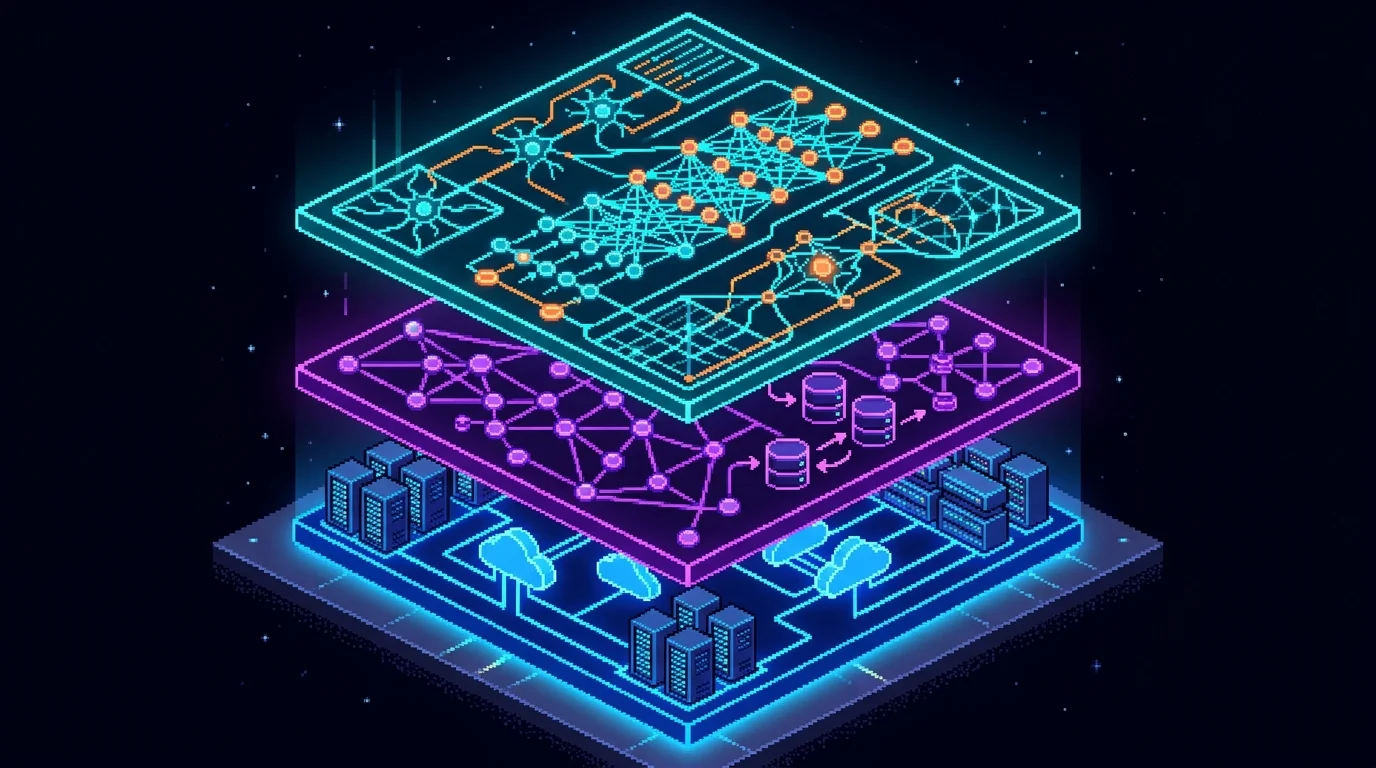
The vibe coding ecosystem operates across three interconnected layers, each solving a specific problem in the journey from idea to live product. Understanding how these layers work together is essential for founders deciding whether this approach fits their timeline and budget.
Layer 1: AI Code Generation
Tools like Cursor, Lovable, and Bolt.new form the creative engine. Cursor AI ($20/month) integrates directly into your development environment, letting you write specifications in plain English while the AI generates functional code. Lovable ($25–$50/month) takes this further—it's built specifically for founders who want to spec a product visually and watch a working prototype materialize in minutes. Bolt.new operates similarly, generating complete applications from text prompts. The speed advantage is real: Lovable claims 20× faster development compared to traditional coding, and Bolt can generate a functional note-taking app in just two minutes. What matters here is that you're not writing code—you're describing what you want, and AI handles the technical translation.
Layer 2: No-Code Platforms and Integrations
Once your AI-generated prototype exists, you need infrastructure that doesn't require a backend engineer. Platforms like Bubble, Webflow, and Firebase handle user authentication, database management, and payment processing without custom code. This layer is where your MVP becomes production-ready. AI-native no-code platforms allow founders to build functional MVPs for under $1,000 in platform fees, compared to traditionally coded prototypes costing $15,000–$30,000. You're essentially plugging pre-built components together rather than engineering from scratch.
Layer 3: Deployment and Scaling
The final layer is infrastructure—Vercel, Netlify, or AWS handle hosting, scaling, and reliability. These platforms are designed for rapid deployment and automatic scaling as your user base grows. You spec the product, the AI builds it, no-code platforms integrate it, and deployment infrastructure keeps it running.
The magic happens when these three layers work in concert. You move from prototype to production without hiring a development team or managing technical debt. This workflow is why founders are collapsing what used to take months into weeks—and why understanding the actual costs of building an AI MVP matters before you commit.
Comparing AI App Builders: Cursor vs. Lovable vs. Bolt for Your MVP Launch
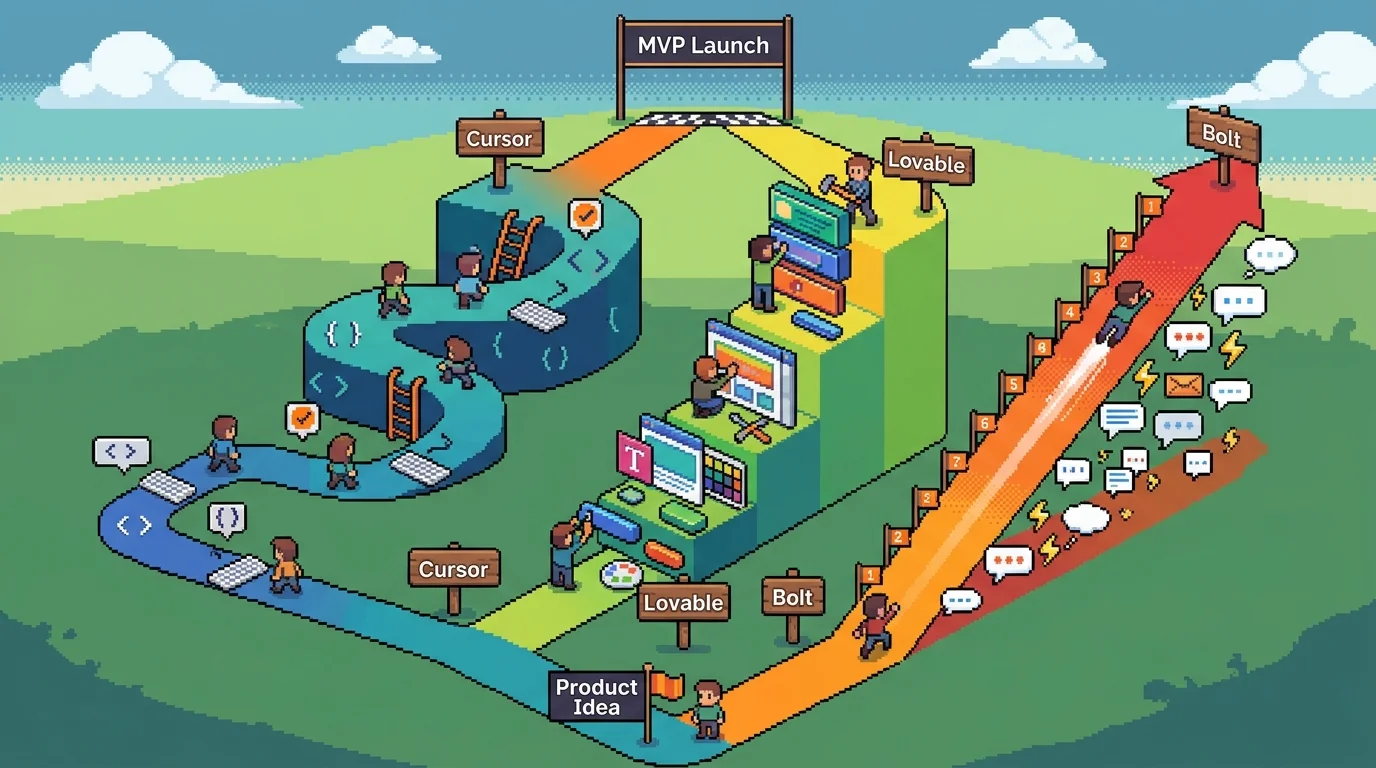
Choosing between AI app builders feels like picking a superpower—each tool promises speed, but they excel in different scenarios. The three frontrunners—Cursor, Lovable, and Bolt—have fundamentally different philosophies about how founders should build, and understanding those differences matters before you commit your MVP timeline.
Factor
Cursor
Lovable
Bolt
Speed to MVP
1–2 weeks (code-first)
48–72 hours (visual-first)
24–48 hours (chat-driven)
Learning Curve
Moderate (requires code literacy)
Low (drag-and-drop UI)
Very Low (natural language)
Code Quality
High (human-readable, maintainable)
Medium (abstracted, harder to extend)
Medium (generated, requires review)
Customization Depth
Deep (full code access)
Moderate (limited backend logic)
Moderate (API integrations possible)
Best For
Founders who code or want to learn
Non-technical founders building simple SaaS
Non-technical founders launching in 48 hours
Cursor is the developer's choice. It's an IDE powered by AI that accelerates coding rather than replacing it. If you have coding experience or are willing to learn, Cursor lets you build production-grade applications with full control over architecture. The trade-off: you're still writing code, just faster. Your MVP takes 1–2 weeks, but the result is a codebase you own and understand completely.
Lovable targets visual builders. Its interface-first approach means you design your product visually, and the platform generates the underlying code. This works beautifully for straightforward SaaS products—dashboards, forms, simple workflows. But when you need complex backend logic or custom integrations, you hit walls. Launch time: 48–72 hours for a polished MVP.
Bolt is the speed champion. It operates entirely through conversation—you describe your product, and it generates a working application in real-time. This is genuinely remarkable for launching in 48 hours. However, according to research from CodeRabbit, AI-generated code produces significantly more issues per pull request than human-written code, meaning you'll spend time debugging and refining.
The real decision: Are you launching a simple SaaS with standard features (Lovable wins)? Do you need production-ready code you can extend later (Cursor)? Or is speed your only metric, and you'll iterate heavily post-launch (Bolt)? Your choice depends less on the tool's capabilities and more on your tolerance for technical debt and timeline pressure. Understanding the actual costs of building an AI MVP helps clarify which approach fits your budget and risk tolerance.
The Vibe Coding Workflow: How Non-Technical Founders Spec and Build Products
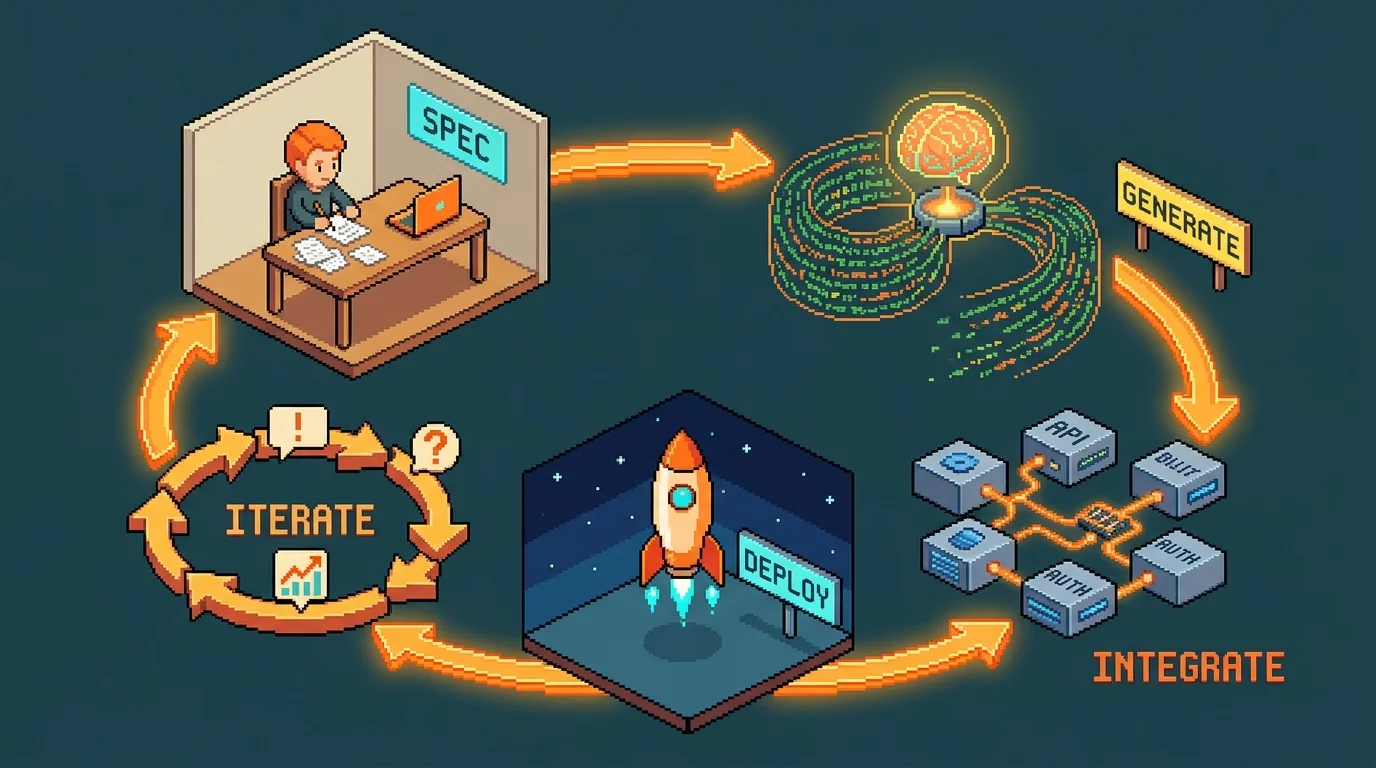
The vibe coding workflow transforms how non-technical founders move from idea to deployed product. Rather than learning to code or hiring engineers, you orchestrate a process that combines strategic thinking with AI-assisted development. The workflow isn't magic—it's a disciplined sequence that separates founders who ship from those who get stuck in endless iteration.
Step 1: Define Your MVP in Plain Language
Start by writing a detailed product specification without any technical jargon. Describe what your users see, what they click, what happens next. Include user flows, data requirements, and business logic in plain English. This isn't casual—it's architectural thinking expressed in words instead of code. A vague spec like "build a marketplace" fails. A precise one maps user journeys: "When a seller uploads a product, the system validates the image, extracts metadata, and displays it in their dashboard within 3 seconds."
Step 2: Feed Specs Into Your AI Code Generator
Copy your specification into Cursor, Lovable, or Bolt. These tools parse your requirements and generate working code. The quality depends entirely on specification clarity. Ambiguous inputs produce bloated, unusable outputs. Clear inputs generate production-ready scaffolding.
Step 3: Iterate on Generated Code
Review the output. Test the generated application. Identify gaps—missing validations, incorrect workflows, performance issues. Feed corrections back into the tool. This cycle typically runs 3–5 rounds before you have something launchable.
Step 4: Integrate No-Code Services
Connect payment processors (Stripe), user authentication (Auth0), databases (Supabase), and email services (SendGrid) through pre-built integrations. These connections happen through UI, not code.
Step 5: Deploy and Test with Real Users
Push to production. Collect feedback. Iterate based on actual usage patterns, not assumptions. Understanding the actual costs of building an AI MVP helps you budget for this phase realistically.
The critical insight: vibe coding requires architectural clarity upfront. You're not writing prompts—you're designing products through specification, then using AI to execute that design.
Beyond the AI Prototype: Why Founders Need More Than Just Vibe Coding
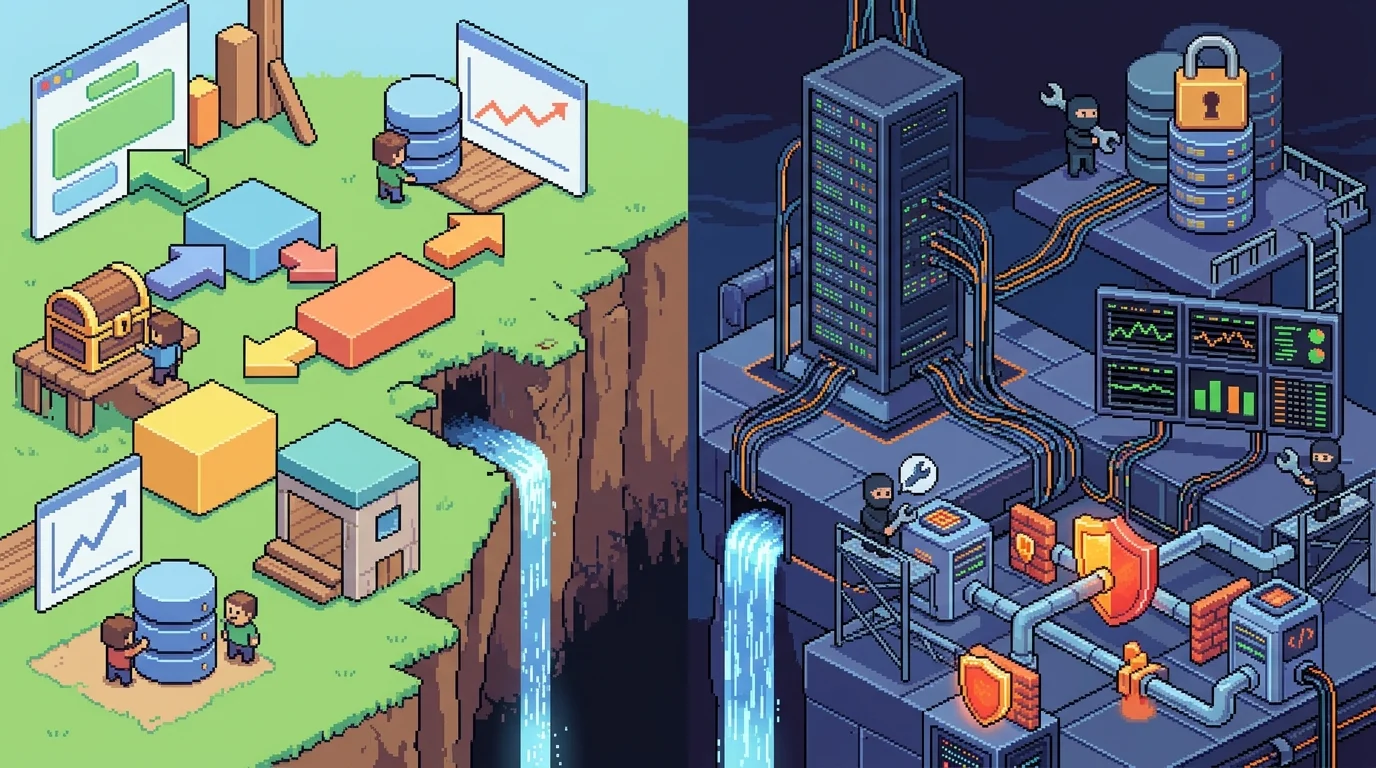
The moment your AI-generated prototype works is exhilarating. You've proven the concept. Users can click buttons. Data flows. But that working prototype and a production-ready SaaS product are fundamentally different animals—and this gap is where most founders hit a wall.
AI tools and no-code platforms excel at velocity. They generate scaffolding fast. But they don't handle the infrastructure layer that separates hobby projects from businesses. Security hardening, payment processing, user authentication, database optimization, error handling at scale, compliance logging, backup strategies, performance monitoring—these aren't sexy features that AI prompts naturally generate. They're the unsexy foundation that prevents your product from collapsing the moment real users arrive.
Consider the quality problem. According to research from CodeRabbit, AI-generated code shows 1.4–1.7× more critical and major findings, including business logic mistakes, incorrect dependencies, flawed control flow, and security misconfigurations compared to human-written code. That's not a minor variance—it's a structural reliability gap. Add technical debt acceleration: studies show technical debt increases 30–41% after AI tool adoption, with initial velocity gains disappearing within months as you spend time refactoring and debugging.
This is why many founders discover that when AI-generated code is not enough, they need a technical partner who understands both the product vision and production requirements. You need someone who integrates payments without leaving security holes, who structures databases for scale, who builds user management systems that actually work. A technical co-founder alternative handles this layer—the specification-to-deployment pipeline where architectural decisions matter more than prompt creativity.
The path forward isn't abandoning AI tools. It's combining them with structured product development: clear specifications, production-ready infrastructure, integrated business logic, and ongoing optimization based on real usage. That's the difference between a prototype that impresses and a product that scales.
Launching Your Founder-Led Product in 2025: Vibe Coding as Your Starting Point
Vibe coding has fundamentally shifted what's possible for non-technical founders in the first 4–12 weeks of product development. AI-powered tools like Cursor, Lovable, and Bolt combined with no-code platforms let you move from concept to a live, functional MVP without writing a single line of code yourself or hiring a full engineering team. This speed is real—and for validating market fit, it's powerful.
But speed isn't the same as sustainability. The gap between a prototype that impresses early users and a product that scales reliably remains significant. Technical debt accelerates when architectural decisions are made for velocity rather than longevity. Integrations that work in isolation fail under real-world load. User management systems built without security-first thinking create liability.
The winning formula in 2025 isn't choosing between vibe coding and traditional development—it's knowing when each matters. Use AI tools to validate your core idea rapidly. Use them to communicate vision to potential users and investors. But as you approach product-market fit and real customer onboarding, pair that momentum with structured technical strategy: clear specifications, production-ready infrastructure, and integrated business logic.
Evaluate your product complexity honestly. Validate your assumptions quickly. Then choose the right mix of tools and support to scale what works.
Article FAQ
Practical next steps
Who is this startup guide for?
This guide is written for non-technical founders, operators, and small teams who need to make product decisions before hiring a full engineering team. It focuses on practical scope, cost, timeline, and execution trade-offs rather than abstract startup theory.
What should I do after reading this article?
Turn the idea into a small decision: validate the riskiest assumption, estimate the build scope, and decide whether the first version should be no-code, custom code, or a hybrid. Shipkit's free estimate and MVP scope builder can help you translate the article into a concrete plan.
Can Shipkit help implement this kind of product?
Yes. Shipkit helps founders turn validated ideas into fixed-scope MVPs, SaaS products, internal tools, marketplaces, and AI-enabled workflows. The best starting point is to get an estimate or compare your build path before committing budget.