Fixed-Price MVP Development: How to Launch Your Product Predictably in 2026
Alex
··14 min read
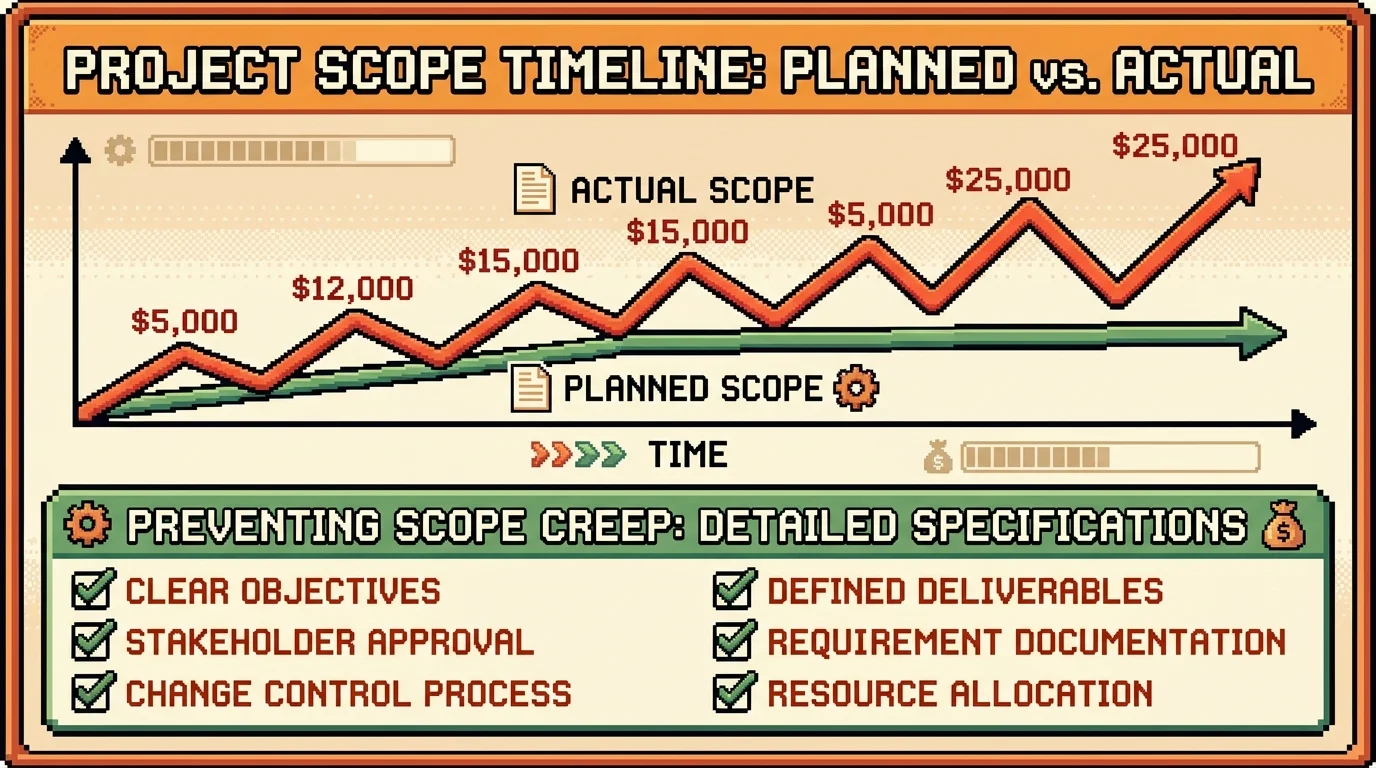
Hourly billing for MVP development feels safe in theory—until your $50,000 budget becomes $120,000 and your three-month timeline stretches into nine months. This happens because scope creep is rampant in software projects. Over 50% of development initiatives experience scope creep, and that number has only grown over recent years according to research from Harvest. When you're paying by the hour, every small change, every "quick feature addition," and every clarification meeting extends your invoice. Fixed-price MVP development flips this dynamic entirely—you know your total cost and delivery date before a single line of code gets written.
Quick Answer: Fixed-price MVP development is a contract model where you pay one flat fee for a complete, production-ready product delivered by a specified date. The core advantage: predictable budgets and timelines eliminate the anxiety of hourly billing surprises, letting you focus on validating your product idea rather than managing vendor costs.
This article walks you through what fixed-price MVP development actually means, how to evaluate agencies offering this model, realistic cost ranges for 2026, and the red flags that separate legitimate partners from those who'll nickel-and-dime you later. If you're a non-technical founder building a SaaS MVP in 4 weeks or scaling a product without a technical cofounder, understanding this pricing model is essential to launching predictably. We'll show you how to structure these deals so both you and your development partner win.
What Fixed-Price MVP Development Actually Means (And Why It Matters)
For 2026 price ranges by complexity tier, see our full MVP development cost guide.
Fixed-price MVP development is straightforward: you agree on a total cost, a defined scope of work, and a delivery date before development begins. Unlike hourly billing where costs accumulate with every meeting and change request, fixed-price means you write one check at the end—or in agreed installments—for a complete, production-ready product. The development partner assumes the financial risk of staying within that budget, which fundamentally changes how they approach the work.
This model matters because it solves the founder's core anxiety: unpredictability. When you're building a startup, you need certainty around how much capital you're burning and when you can launch. Fixed-price contracts eliminate the "scope creep tax" that plagues hourly arrangements. You're not paying extra for clarification calls, design revisions, or small feature adjustments—they're baked into the agreed scope.
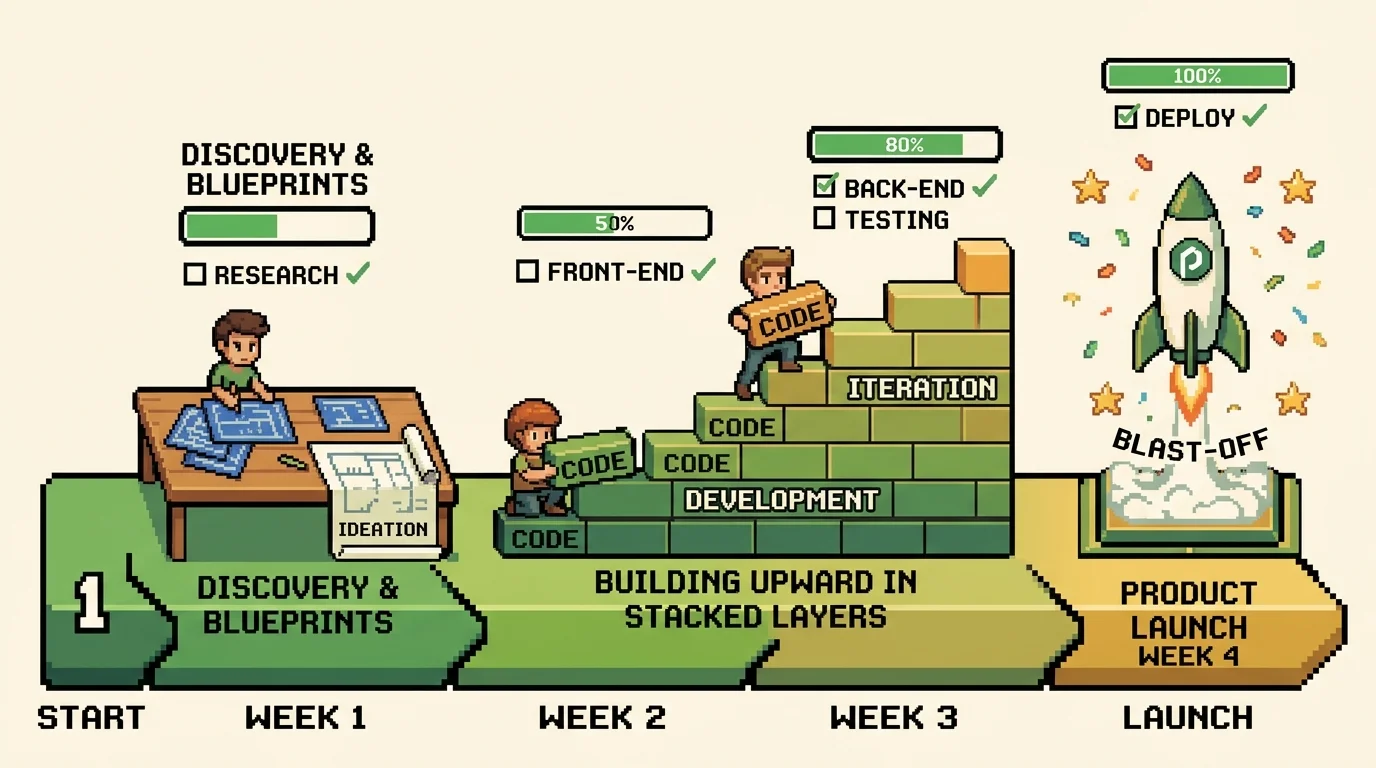
However, fixed-price only works when scope is crystal clear upfront. That's why legitimate fixed-price partners insist on a discovery phase before quoting. This 1–2 week period involves mapping requirements, identifying technical risks, sketching wireframes, and defining what "done" actually means. Without discovery, a fixed-price quote is just a guess—and guesses lead to either unrealistic pricing or corners cut during delivery.
Fixed-Price vs. Hourly vs. Retainer: The Real Differences
The Discovery Phase: Why It's Non-Negotiable for Fixed-Price Projects
Before any fixed price gets quoted, a proper discovery phase prevents both parties from making expensive mistakes. During discovery, your development partner documents functional requirements (what the product does), technical architecture (how it's built), design mockups (what users see), and risk assessment (what could go wrong). This isn't a sales tactic—it's the foundation that makes fixed-price realistic and fair.
When scope is properly defined through discovery, fixed-price becomes a win for both sides. You get certainty and ownership of your code from day one. Your partner gets a clear roadmap and avoids the margin-killing surprises that derail hourly projects. The fixed-price model works best when you have clear product requirements, a tight timeline (4 weeks is typical), and need a production-ready application without managing a technical team yourself.
Fixed-Price MVP Development Cost Breakdown by Project Type
Understanding what you'll actually pay for a fixed-price MVP requires breaking down costs by complexity and project category. The market in 2026 shows clear pricing patterns: according to industry data, MVP development ranges from $20,000 to $120,000 on average, with simple projects at the lower end and AI-powered or compliance-heavy builds exceeding that range. What drives these differences isn't just lines of code—it's scope clarity, integration complexity, and the expertise required to ship production-ready software without surprises.
Project Type
Complexity Level
Fixed-Price Range
Timeline
Key Deliverables
What's NOT Included
Basic SaaS Tool
Simple
$15,000–$30,000
4–6 weeks
Design, core features, user auth, deployment
Advanced analytics, custom integrations, 24/7 support
Ongoing compliance monitoring, enterprise SLA support
Simple MVP: $15,000–$30,000 (4–6 weeks)
A simple MVP solves one core problem with minimal moving parts. Think of it as a single feature loop: users sign up, perform one main action, and see results. Examples include a basic SaaS tool for task management, a simple web app for service businesses, or a landing page with form validation and email notifications. What's included: professional design, development, testing, and deployment to production. What's not: advanced AI features, complex third-party integrations, or extensive customization beyond the spec. This tier works best when your requirements are locked down before development starts.
Medium MVP: $30,000–$60,000 (6–10 weeks)
Medium complexity introduces multiple user types, basic integrations, or moderate feature depth. A client portal for agencies, a two-sided marketplace MVP connecting buyers and sellers, or a SaaS platform with user roles and permissions all fit here. Costs increase because you're coordinating between systems—payment processors, email services, authentication providers—and testing across different user workflows. Timelines stretch because QA becomes more rigorous. You're still shipping fast, but the product now handles real business logic, not just data entry.
Complex MVP: $60,000–$120,000+ (10–16 weeks)
Complex projects demand specialized expertise and extended timelines. AI-powered applications, real-time collaboration features, or compliance-heavy products (healthcare, fintech) land here. GenAI features like RAG, chat interfaces, and copilots add 15–30% to budgets for data preparation and safety guardrails. Security audits, scalability planning, and integration with legacy systems all push costs upward. These projects often require senior engineers and domain specialists, which is why fixed pricing becomes critical—you need certainty before committing resources.
Regional variations matter: US-based agencies cost 30–50% more than offshore teams but offer tighter communication, faster iteration, and accountability for code ownership. For founders building without a technical co-founder, the premium often pays for itself through fewer misalignments and faster time-to-market.
How to Evaluate a Fixed-Price MVP Development Agency
Choosing the right fixed-price development partner is the difference between launching predictably and watching your timeline collapse. Since you're not a technical founder, you can't rely on code reviews or architecture discussions to judge quality—you need a framework that focuses on process, communication, and accountability. The best agencies will welcome scrutiny because they've built repeatable systems designed to deliver on promises.
Green Flags: What to Look For in a Fixed-Price Proposal
A strong proposal reads like a contract, not a brochure. It should include a detailed scope document that lists every feature, integration, and deliverable by name—not vague phrases like "user authentication" but "email/password login with password reset flow and two-factor authentication via SMS." Milestones should be specific and measurable: "Week 4: Payment processing live with Stripe integration tested against 50 test transactions" beats "mid-project checkpoint."
Look for evidence of discovery work. Agencies that jump straight to pricing without asking questions about your users, workflows, and business logic are cutting corners. A real discovery phase takes 1–2 weeks and results in a written specification document you can review. Defined revision limits matter too—typically 2–3 rounds of changes per milestone. Unlimited revisions sound appealing until they become a cost sink that extends timelines indefinitely.
Transparent payment terms protect both parties. Standard structures are 30% upfront, 40% at mid-project, 30% on delivery—or split equally across milestones. Avoid agencies that demand 100% upfront or offer no payment schedule. Ask explicitly about code ownership and IP rights; you should own the codebase and infrastructure from day one, not license it. Finally, request case studies or testimonials from founders who built similar projects—especially if you're developing an AI app or migrating from no-code platforms like Bubble.
Red Flags: Warning Signs to Avoid
Vague scope is the loudest warning signal. Phrases like "we'll figure it out as we go" or "scope may expand based on discoveries" mean you're not getting a fixed price—you're getting a blank check. Similarly, unrealistic timelines (MVP in two weeks, complex SaaS in four) indicate the agency either doesn't understand your project or is setting you up for failure.
Agencies unwilling to do discovery, those that skip the specification phase entirely, are treating your project like a template rather than a custom build. If they can't articulate why your timeline costs what it does, that's a red flag. Unclear code ownership—especially language like "you license the software" or "we retain certain rights"—means you don't truly own your product. Poor communication habits show up early: slow email responses, vague status updates, or reluctance to explain technical decisions in founder-friendly language.
Beware of agencies that lead with price instead of value. The cheapest option rarely delivers the fastest or most reliable result. Finally, if an agency pressures you to sign before you've reviewed a detailed proposal or seems uncomfortable committing to fixed terms, walk away. Reputable partners thrive on clarity and accountability.
When evaluating agencies, also consider their experience with your specific tech stack and industry. If you're building an AI MVP, ask about their experience with RAG systems, data pipelines, and safety testing. If you're migrating from a no-code platform, confirm they've handled similar transitions before. The best agency for your project isn't necessarily the most expensive or the most famous—it's the one that understands your constraints and communicates them back to you clearly, in writing, before work begins.
Why Shipkit's 4-Week Fixed-Price Model Works for Non-Technical Founders
The core tension in MVP development is simple: founders want speed and certainty, but most agencies can't deliver both. Shipkit's approach solves this by combining rapid discovery, pre-built architectural patterns, and clear scope boundaries into a fixed-price delivery model that actually works. The 4-week timeline isn't a marketing claim—it's built on eliminating the variables that typically derail projects: unclear requirements, scope creep, and rework cycles.
The secret lies in front-loading discovery. Rather than diving into code with vague wireframes, Shipkit invests the first week in deep specification work. This means you walk in with an idea, and within five days, you have a detailed technical specification document that both you and the development team have signed off on. This removes the most dangerous source of delays: discovering halfway through that "user authentication" meant something completely different to you than to the developer. By the time code starts, everyone operates from the same blueprint.
Pre-built integrations accelerate the entire development cycle. Instead of building payment processing, user management, and business logic from scratch, Shipkit layers these into a standard architecture. You're not paying for Stripe integration to be invented—you're paying for it to be configured to your exact workflow. This approach cuts development time dramatically while maintaining production quality. The result is that a marketplace MVP, SaaS product, or internal tool that might take a traditional agency 12 weeks gets delivered in four.
Code ownership and infrastructure control matter more than most founders realize. You receive full ownership of the codebase and infrastructure from day one—no licensing agreements, no vendor lock-in, no surprise bills from a platform you didn't know you were locked into. The architecture is AI-ready by default, meaning your product can evolve toward machine learning features without a complete rewrite. This matters because the MVP you ship in 2026 needs to be a foundation, not a dead end.
What's Included in a Fixed-Price MVP Package
A fixed-price engagement covers the full development lifecycle: requirements gathering, design, full-stack development, testing, deployment, and 30 days of post-launch support. You get documentation that explains how the system works—not for engineers, but for you as the founder. This is critical because you own the code; you need to understand what you own.
What's explicitly not included: ongoing maintenance beyond the 30-day window, feature additions after launch, or advanced customization beyond the agreed scope. This boundary is where fixed-price models protect both sides. If scope creeps, the timeline stretches or the price rises—but the contract makes this transparent before work begins. You know exactly what you're getting and what comes later.
The fixed price covers complexity honestly. A marketplace MVP with two-sided user flows costs more than a simple SaaS dashboard because it requires more specification work and integration testing. Shipkit doesn't hide this behind vague estimates; the proposal details what complexity level you're building and what that means for cost and timeline. When you're building a SaaS MVP in four weeks, clarity on scope is the only thing standing between a successful launch and a missed deadline.
Common Pitfalls and How to Avoid Them When Choosing a Fixed-Price Agency
The biggest mistake founders make isn't choosing fixed-price development—it's underestimating what "scope" actually means before signing the contract. Scope creep accounts for approximately 27% cost overruns, which on a $50,000 project translates to an unexpected $13,500 bill. This happens because founders describe features vaguely ("user dashboard," "payment integration") without detailing user flows, edge cases, or business logic. The agency interprets the spec one way; you expected something different. By the time you realize the gap, development is underway and changes cost time or money.
The solution is ruthless specification before work begins. A structured discovery phase—even 1–2 weeks—forces both sides to answer hard questions: How many user types exist? What happens when a payment fails? Can users edit past transactions? This upfront investment prevents costly rework later. Companies that skip discovery waste an average of 6–9 months and $50,000–$150,000 building features users don't want, according to industry analysis.
Another pitfall: choosing based on price alone. The cheapest fixed-price quote often reflects a narrower scope or less experienced team. Compare proposals side-by-side—what's included in each? Does one include 30 days of post-launch support while another doesn't? Does ownership of code and infrastructure transfer to you immediately?
Finally, don't skip post-launch planning. Many founders assume the product is "done" at launch, then face unexpected hosting costs, bug fixes, or feature requests that fall outside the fixed-price window. Clarify what happens after day 30. Understanding these boundaries upfront transforms fixed-price development from a cost-control mechanism into genuine predictability.
Making the Right Choice: Your Fixed-Price MVP Development Checklist
A one-page, plain-language scope that lists user types, core flows (signup, payments, key actions), and what's explicitly out of scope.
Transparent pricing that separates build, integrations, and post-launch support—no vague "implementation" buckets.
A documented, repeatable process from discovery to deployment, ideally with examples (e.g., how they handle auth and user roles or payments).
Clear post-launch support: bug window, response times, and how change requests are estimated and approved.
Full code and infrastructure ownership in your accounts from day one, so you can switch teams without rebuilding.
Experience with mvp development for non technical founders, backed by relevant case studies and references.
A realistic timeline and quote that aligns with what you've learned about MVP costs from resources like this guide and deeper breakdowns of MVP pricing for founders.
If you want a sanity check before you sign anything, book a free founder call with Shipkit to validate your idea and get a grounded fixed-price proposal.
Article FAQ
Practical next steps
Who is this MVP guide for?
This guide is written for non-technical founders, operators, and small teams who need to make product decisions before hiring a full engineering team. It focuses on practical scope, cost, timeline, and execution trade-offs rather than abstract startup theory.
What should I do after reading this article?
Turn the idea into a small decision: validate the riskiest assumption, estimate the build scope, and decide whether the first version should be no-code, custom code, or a hybrid. Shipkit's free estimate and MVP scope builder can help you translate the article into a concrete plan.
Can Shipkit help implement this kind of product?
Yes. Shipkit helps founders turn validated ideas into fixed-scope MVPs, SaaS products, internal tools, marketplaces, and AI-enabled workflows. The best starting point is to get an estimate or compare your build path before committing budget.